

How does the Xcmg Xs223 Road Roller's drum surface wear over time?
As a supplier of the Xcmg Xs223 Road Roller, I've witnessed firsthand the remarkable performance and durability of this construction workhorse. However, like any piece of heavy - duty machinery, the drum surface of the Xcmg Xs223 Road Roller is subject to wear over time. In this blog, I'll delve into the factors that contribute to this wear and explore how it evolves throughout the roller's lifespan.
Understanding the Drum Surface of Xcmg Xs223 Road Roller
The drum is the heart of a road roller, and the Xcmg Xs223 is no exception. The drum surface is designed to compact various types of soil, asphalt, and other materials during road construction and maintenance projects. It is typically made of high - quality steel with special heat - treatment processes to enhance its hardness and wear resistance. The smoothness and integrity of the drum surface are crucial for achieving uniform compaction results.
Factors Affecting Drum Surface Wear
Working Conditions
One of the primary factors influencing drum surface wear is the working conditions. When the Xcmg Xs223 Road Roller operates on rough or abrasive terrains, such as gravel - filled roads or construction sites with sharp - edged rocks, the drum surface is more likely to experience significant wear. The constant friction between the drum and these hard materials gradually grinds away the surface layer of the drum.

For example, if the roller is used in a quarry area where the soil contains a high percentage of quartz, a very hard mineral, the quartz particles can act like tiny cutting tools, scratching and abrading the drum surface. In contrast, when working on a well - prepared asphalt surface, the wear rate will be relatively lower.
Compaction Materials
The type of materials being compacted also plays a vital role in drum surface wear. Asphalt, for instance, has a different consistency compared to soil. When compacting asphalt, the drum may come into contact with hot bitumen, which can cause adhesion issues. If the bitumen adheres to the drum surface, it can attract dirt and other debris, leading to uneven wear as the roller moves.
On the other hand, compacting soil with high clay content can result in a different kind of wear. Clay can stick to the drum, and when it dries, it can form a hard layer that increases friction and wear on the drum surface.
Operating Frequency and Duration
The more frequently and for longer periods the Xcmg Xs223 Road Roller is used, the faster the drum surface will wear. Continuous operation without proper breaks can cause the drum to overheat, which may lead to a reduction in the hardness of the surface material. Overheating can also accelerate chemical reactions on the drum surface, making it more susceptible to corrosion and wear.
For example, if a construction project requires the roller to work non - stop for multiple shifts in a day, the wear on the drum surface will be much more pronounced compared to a project where the roller is used for a few hours a day with adequate cooling periods.
Stages of Drum Surface Wear
Initial Wear
In the early stages of the Xcmg Xs223 Road Roller's operation, the drum surface experiences a period of initial wear. This is mainly due to the "running - in" process. During this time, the microscopic irregularities on the drum surface are gradually smoothed out as the roller starts to interact with the compaction materials.
The initial wear is usually uniform across the drum surface, and it is a normal part of the roller's break - in period. This stage can last for the first few hundred hours of operation, depending on the working conditions.
Steady - State Wear
After the initial wear stage, the drum surface enters a phase of steady - state wear. During this period, the wear rate becomes relatively constant. The drum surface continues to lose material at a predictable rate, which is mainly determined by the factors mentioned above, such as working conditions, compaction materials, and operating frequency.
If the roller is operated under normal conditions, the steady - state wear can be managed through regular maintenance and inspections. However, if the working conditions are harsh, the wear rate may increase, and the drum surface may start to show signs of uneven wear, such as grooves or pitting.
Accelerated Wear
As the Xcmg Xs223 Road Roller approaches the end of its drum's service life, it may enter a stage of accelerated wear. This can be caused by a combination of factors, including the cumulative effect of long - term wear, fatigue of the drum material, and the presence of any undetected damage on the drum surface.
Accelerated wear can lead to a significant reduction in the compaction performance of the roller. The uneven drum surface can result in inconsistent compaction, which may lead to quality issues in the road construction project.
Monitoring and Mitigating Drum Surface Wear
Regular Inspections
As a supplier, I always recommend regular inspections of the drum surface. This can be done visually to check for signs of wear, such as scratches, grooves, or pitting. Measuring the thickness of the drum surface at different points can also provide valuable information about the wear rate.
During inspections, it is also important to check for any signs of damage, such as cracks or deformation. Early detection of these issues can prevent further damage and extend the service life of the drum.
Maintenance and Cleaning
Proper maintenance and cleaning are essential for reducing drum surface wear. After each use, the drum should be cleaned to remove any adhered materials, such as bitumen or clay. This can prevent the build - up of debris, which can increase friction and wear.
Regular lubrication of the drum's moving parts can also help reduce wear. Lubrication ensures smooth operation and reduces the heat generated during operation, which can prevent overheating and subsequent wear on the drum surface.
Replacement of Worn Parts
When the drum surface reaches a certain level of wear, it may be necessary to replace the drum or perform surface re - treatment. This decision should be based on the results of regular inspections and the compaction performance of the roller.
Replacing worn parts in a timely manner can ensure that the Xcmg Xs223 Road Roller continues to operate at its optimal level and can prevent more serious damage to the machine.
Comparison with Other Construction Machinery
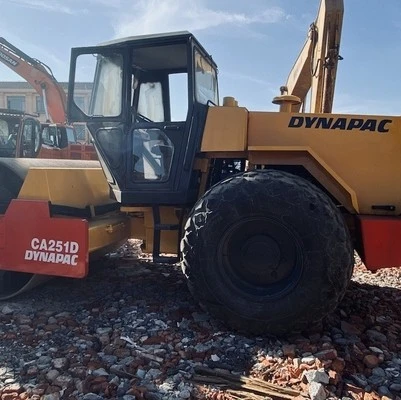
In the construction machinery market, there are many other types of equipment that also play important roles in road construction. For example, the Xcmg Xct40u Truck Crane is a powerful lifting device, while the Dynapc Ca25 Rollers and Cat D6d Bulldozers are used for different aspects of earth - moving and compaction work.
Compared to these machines, the Xcmg Xs223 Road Roller has its unique characteristics in terms of drum surface wear. While cranes and bulldozers may have different wear patterns on their key components, the drum of the road roller is directly in contact with the compaction materials, which makes its wear more closely related to the nature of the materials and the working environment.
Conclusion
In conclusion, the drum surface wear of the Xcmg Xs223 Road Roller is a complex process influenced by multiple factors. Understanding these factors and the stages of wear is crucial for ensuring the long - term performance and reliability of the roller.
As a supplier, I am committed to providing high - quality Xcmg Xs223 Road Rollers and comprehensive after - sales support. If you are interested in purchasing our Xcmg Xs223 Road Rollers or have any questions about drum surface wear and maintenance, please feel free to contact us for procurement discussions. We look forward to working with you on your construction projects.
References
- Construction Machinery Handbook, 3rd Edition
- Research Papers on Road Roller Performance and Wear