

Is the Mitsubishi 430 Grader environmentally friendly?
In the modern construction industry, environmental friendliness has become a crucial consideration for both equipment manufacturers and end - users. As a supplier of the Mitsubishi 430 Grader, I am often asked about the environmental performance of this particular piece of machinery. In this blog, I will delve into the various aspects of the Mitsubishi 430 Grader to determine whether it can be considered environmentally friendly.
Engine Technology
One of the primary factors contributing to a construction equipment's environmental impact is its engine. The Mitsubishi 430 Grader is equipped with an advanced diesel engine. Modern diesel engines, like the one in the Mitsubishi 430, have made significant strides in reducing emissions.
Mitsubishi has incorporated technologies such as common - rail fuel injection systems in their engines. This technology allows for more precise control of fuel delivery, which in turn leads to more efficient combustion. When fuel is burned more efficiently, less unburned fuel is released into the atmosphere, reducing harmful emissions such as particulate matter (PM) and nitrogen oxides (NOx).
Moreover, the engine in the Mitsubishi 430 Grader is designed to meet strict emission standards. These standards are set by regulatory bodies around the world to protect the environment and human health. By meeting these standards, the grader is ensuring that it is not contributing excessively to air pollution compared to older, less - efficient models.
Fuel Efficiency
Fuel efficiency is closely related to environmental friendliness. A grader that consumes less fuel not only saves the operator money but also reduces the overall carbon footprint. The Mitsubishi 430 Grader is engineered to be fuel - efficient.
It has an optimized power - to - weight ratio, which means that it can perform its tasks with less energy. The grader's hydraulic system is also designed to operate with minimal energy losses. For example, the hydraulic pumps are sized and configured to provide just the right amount of power to the various functions of the grader, such as blade movement and steering, without wasting excess energy.
When compared to some of its competitors like the Cat D6g2 Bulldozers, the Mitsubishi 430 Grader often shows better fuel - consumption figures in real - world applications. This is due to its advanced engineering and continuous improvement in design.
Noise Pollution
Noise pollution is another environmental concern, especially in construction sites located near residential areas or sensitive ecological zones. The Mitsubishi 430 Grader is designed to operate quietly.
It has a well - insulated engine compartment that helps to muffle the sound of the engine. The hydraulic components are also selected and installed in a way that reduces noise generation. For example, the hydraulic hoses are properly routed and secured to prevent vibration - induced noise.
This low - noise operation not only benefits the environment by reducing the overall noise level in the area but also improves the working conditions for the operators. Long - term exposure to high - level noise can cause hearing damage, and the quiet operation of the Mitsubishi 430 Grader helps to mitigate this risk.
Recycling and Disposal
When the Mitsubishi 430 Grader reaches the end of its useful life, its design allows for relatively easy recycling and proper disposal. Many of the components of the grader, such as the steel frame, engine parts, and hydraulic cylinders, can be recycled.
Mitsubishi follows a sustainable approach in the manufacturing process, which also extends to the end - of - life management of its products. The company encourages the proper recycling and reuse of parts to reduce the amount of waste sent to landfills. This is in line with the principles of a circular economy, where resources are kept in use for as long as possible.
Comparison with Other Construction Equipment
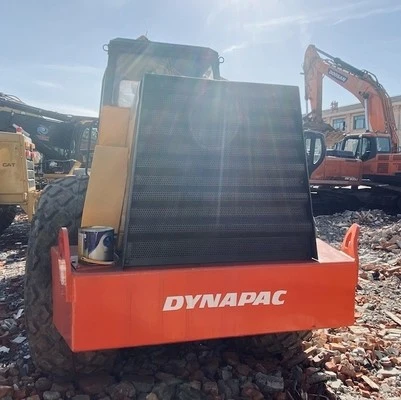
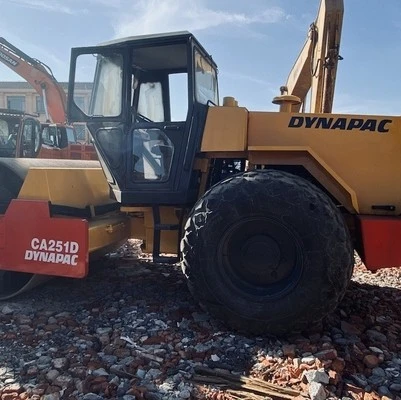
Let's compare the Mitsubishi 430 Grader with other types of construction equipment in terms of environmental friendliness. Take the Dynapc Ca25 Rollers and Xcmg Xct85l7 Truck Crane for example.
Rollers like the Dynapc Ca25 are mainly used for compacting soil and asphalt. While they also have their own environmental considerations such as fuel consumption and noise, the Mitsubishi 430 Grader has a different set of functions. The grader is more focused on grading and leveling surfaces. In terms of fuel efficiency, the grader's design allows it to perform its tasks with relatively less fuel consumption per unit of work compared to some rollers.
Truck cranes like the Xcmg Xct85l7 are used for lifting heavy loads. They typically have large engines to provide the necessary power for lifting. The Mitsubishi 430 Grader, on the other hand, has a more specialized function and a more optimized engine for its specific tasks. This often results in better overall environmental performance in terms of emissions and fuel consumption in its own operational context.
Areas for Improvement
While the Mitsubishi 430 Grader has many positive environmental features, there is always room for improvement. For example, research is ongoing to further reduce the emissions of diesel engines. Future models of the grader may incorporate technologies such as selective catalytic reduction (SCR) systems to further reduce NOx emissions.
There is also potential to improve the grader's energy efficiency even more. This could involve the use of hybrid or electric technologies in the future. Although these technologies are still in the early stages of development for large - scale construction equipment, they hold great promise for reducing the environmental impact of graders and other construction machinery.
Conclusion
In conclusion, the Mitsubishi 430 Grader can be considered environmentally friendly. Its advanced engine technology, fuel efficiency, low - noise operation, and end - of - life recycling potential all contribute to its positive environmental profile. When compared to other construction equipment, it often performs well in terms of environmental impact.
However, the construction industry is constantly evolving, and environmental standards are becoming more stringent. Mitsubishi, as a manufacturer, is likely to continue to invest in research and development to further improve the environmental performance of the 430 Grader.
If you are in the market for a grader and are concerned about environmental friendliness, the Mitsubishi 430 Grader is definitely worth considering. I invite you to reach out for more information and to start a discussion about your procurement needs. Whether you are a small - scale contractor or a large construction company, the Mitsubishi 430 Grader can be a valuable addition to your fleet while also being kind to the environment.
References
- Mitsubishi Heavy Industries Construction Machinery Co., Ltd. Technical specifications of Mitsubishi 430 Grader.
- Industry reports on construction equipment environmental performance.
- Regulatory documents on emission standards for construction machinery.