

What are the advantages of using automated agricultural machinery?
In the ever - evolving landscape of agriculture, the adoption of automated agricultural machinery has emerged as a game - changer. As an established agricultural machinery supplier, I've witnessed firsthand the transformative impact these technologies have on modern farming. In this blog, I'll delve into the numerous advantages of using automated agricultural machinery, highlighting how it can revolutionize the way we approach farming.
1. Increased Efficiency
One of the most significant advantages of automated agricultural machinery is the substantial increase in efficiency. Traditional farming methods are often labor - intensive and time - consuming. For example, tasks such as plowing, seeding, and harvesting require a large workforce and can take days or even weeks to complete, depending on the size of the farm.
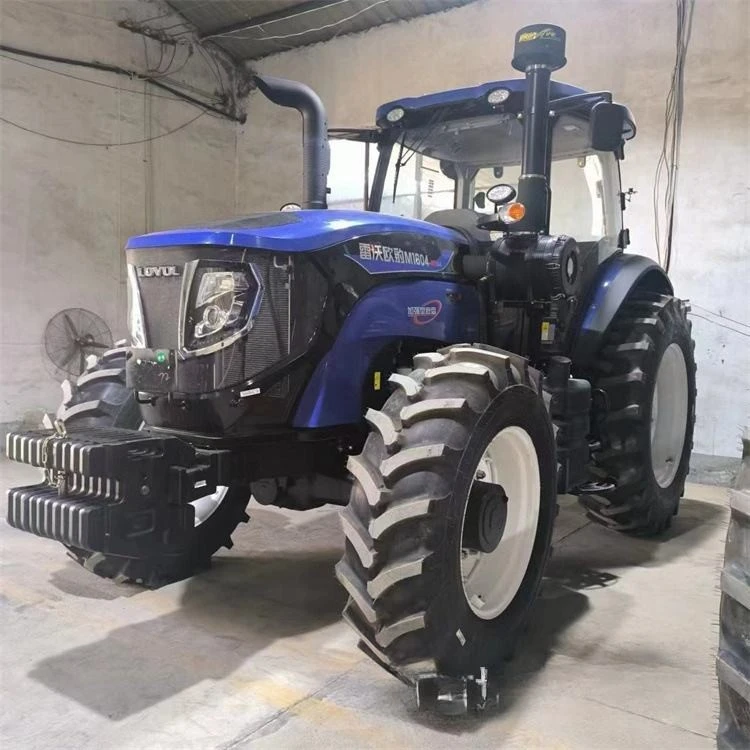
Automated tractors, like the Lovolp1604 - 4 Agricultural Tractor, are equipped with advanced GPS and sensor technologies. These features allow them to operate with high precision, following pre - programmed routes. This means that they can cover large areas of land in a shorter time compared to manual operations. The tractor can work continuously without breaks, maximizing the amount of work done per day.
In addition, automated machinery can perform multiple tasks simultaneously. Some modern seeders can not only plant seeds at a consistent depth and spacing but also apply fertilizers and pesticides at the same time. This integration of functions reduces the number of passes over the field, saving both time and fuel.
2. Precision Farming
Precision farming is a concept that aims to optimize agricultural production by using data - driven decision - making. Automated agricultural machinery plays a crucial role in enabling precision farming.
Automated drones are used for aerial surveys of farms. They can capture high - resolution images of the crops, which can be analyzed to detect early signs of diseases, nutrient deficiencies, or water stress. This early detection allows farmers to take targeted action, applying pesticides or fertilizers only where they are needed. This not only reduces the amount of chemicals used but also improves the overall health of the crops.
The Lovolp M3004 - 7n Agricultural Tractor can be programmed to adjust its operations based on the specific conditions of different parts of the field. For instance, if a particular area of the field has lower soil fertility, the tractor can apply more fertilizers to that area while using less in areas with higher fertility. This precise application of resources leads to better yields and more sustainable farming practices.
3. Labor Savings
The agricultural industry has been facing a shortage of labor in many regions. Automated agricultural machinery helps to address this issue by reducing the need for a large workforce.
With the use of automated harvesters, farmers no longer need to hire a large number of seasonal workers during the harvest season. These machines can work around the clock, efficiently picking and sorting crops. This not only solves the labor shortage problem but also reduces labor costs.
Farmers can re - allocate their human resources to more value - added tasks, such as crop management, marketing, and strategic planning. Instead of spending long hours in the fields performing repetitive tasks, they can focus on improving the overall profitability and sustainability of their farms.
4. Improved Safety
Safety is a major concern in agriculture. Working with large machinery and in potentially hazardous environments can pose risks to farmers. Automated agricultural machinery helps to mitigate these risks.
Since automated machines can operate without a human operator on board in some cases, farmers are removed from dangerous situations. For example, in the case of spraying pesticides, automated sprayers can be programmed to cover the fields, eliminating the need for farmers to be directly exposed to harmful chemicals.
Moreover, automated machinery is equipped with advanced safety features. Sensors can detect obstacles in the path of the machine and automatically stop or change the route to avoid collisions. This reduces the likelihood of accidents and injuries on the farm.
5. Consistency and Quality
Automated agricultural machinery ensures a high level of consistency in agricultural operations. When planting seeds, for example, the Lovolp M1204 - 4x Agricultural Tractor can maintain a consistent depth and spacing between seeds. This uniformity leads to more even crop growth, which in turn results in better - quality produce.
In harvesting operations, automated harvesters can pick crops at the optimal time and with a consistent level of quality. They can handle the crops gently, reducing damage and waste. This is particularly important for high - value crops such as fruits and vegetables, where the appearance and quality of the produce can significantly affect the market price.
6. Data Collection and Analysis
Automated agricultural machinery is a rich source of data. The sensors on the machines collect a vast amount of information about the field conditions, crop growth, and machine performance.
This data can be analyzed to gain valuable insights into the farm's operations. Farmers can use this information to make informed decisions about future planting schedules, resource allocation, and equipment maintenance. For example, by analyzing the fuel consumption data of a tractor, farmers can identify if there are any inefficiencies in its operation and take steps to optimize it.
The data can also be shared with agricultural experts or researchers, who can provide further guidance on improving farm productivity and sustainability. This data - driven approach to farming is becoming increasingly important in the face of changing climate conditions and growing global food demand.
7. Sustainability
Automated agricultural machinery contributes to more sustainable farming practices. By enabling precision farming, it reduces the overuse of resources such as water, fertilizers, and pesticides. This not only protects the environment but also reduces the cost of production.
Automated irrigation systems can be programmed to deliver the right amount of water to the crops based on their actual needs. This helps to conserve water, which is a precious resource in many agricultural regions.
In addition, the use of automated machinery can reduce soil compaction. Since the machines can be programmed to follow specific routes and distribute their weight evenly, they cause less damage to the soil structure. This allows for better water infiltration and root growth, improving the long - term health of the soil.
Contact for Purchase and Negotiation
If you're interested in exploring how automated agricultural machinery can benefit your farm, I encourage you to reach out to us. We have a wide range of high - quality automated agricultural machinery, including the tractors mentioned above, to meet your specific needs. Our team of experts can provide you with detailed information, demonstration, and support to help you make the right choice for your farm.

References
- Blackmore, B. S. (2016). Precision agriculture: technology, concepts and development. Journal of Agricultural Engineering Research, 74(3), 219 - 232.
- Lowenberg - DeBoer, J., & Erickson, L. (2019). Precision agriculture and the future of farming. Annual Review of Resource Economics, 11, 411 - 431.
- Stafford, J. V. (2000). Precision agriculture: the current state of information technology. Computers and Electronics in Agriculture, 27(2), 197 - 211.