

What is the control layout inside the cab of the Cat 140h Grader?
As a proud supplier of the Cat 140h Grader, I've had the privilege of getting up close and personal with this remarkable piece of construction machinery. One of the most critical aspects of any heavy - equipment operator's experience is the control layout inside the cab. In this blog, I'll take you on a detailed tour of what you can expect when you step into the cab of a Cat 140h Grader.
The Overall Design and Ergonomics
The cab of the Cat 140h Grader is designed with the operator in mind. It's all about providing a comfortable and efficient workspace that allows for long - hours of operation without excessive fatigue. The layout is intuitive, with controls placed within easy reach of the operator.
The seats are adjustable, providing support for the back and legs. This is essential as operators may spend hours on end in the cab, grading large areas of land. The adjustable seat also allows operators of different sizes to find their optimal seating position, ensuring maximum comfort and control.
Steering and Forward/Reverse Controls
At the heart of the control layout is the steering mechanism. The steering wheel on the Cat 140h Grader is well - sized, providing a good grip for the operator. It's responsive, allowing for precise control of the grader's direction.
Next to the steering wheel, you'll find the forward and reverse controls. These are typically easy - to - reach levers that allow the operator to quickly switch between forward and reverse motion. This is crucial for tasks such as backing up to re - position the grader or maneuvering in tight spaces. The levers are designed to be operated with minimal effort, reducing operator fatigue.
Blade Controls
The blade is the most important working part of the grader, and its controls are carefully placed for easy access. There are usually multiple levers or joysticks dedicated to blade movement.
One set of controls is used to raise and lower the blade. This allows the operator to adjust the cutting depth of the blade as needed. For example, when grading a flat surface, the operator may lower the blade slightly to smooth out small bumps.
Another set of controls is used to tilt the blade. Tilting the blade can be useful for tasks such as creating a crowned road surface. By tilting the blade, the operator can direct the material being pushed by the blade to one side or the other.
There are also controls for lateral movement of the blade. This allows the operator to move the blade left or right relative to the grader's body. This is useful for tasks such as aligning the blade with a specific point on the ground or making adjustments to the grading width.
Moldboard Angle Controls
In addition to the basic blade movement controls, there are also controls for adjusting the moldboard angle. The moldboard is the part of the blade that actually comes into contact with the ground. By adjusting its angle, the operator can change the way the material is pushed or pulled by the blade.
For example, a steeper moldboard angle may be used when pushing a large amount of material, while a shallower angle may be used for more precise grading work. The moldboard angle controls are typically located near the blade controls for easy access.
Hydraulic System Controls
The Cat 140h Grader relies on a hydraulic system to power many of its functions. There are controls for the hydraulic system that allow the operator to adjust the flow and pressure of the hydraulic fluid.
These controls are important for ensuring that the various hydraulic components, such as the blade and steering, operate smoothly and efficiently. For example, if the hydraulic pressure is too low, the blade may not move as quickly or as forcefully as needed. On the other hand, if the pressure is too high, it can put unnecessary stress on the hydraulic components.
Instrument Panel
The instrument panel is located in front of the operator, providing important information about the grader's operation. It typically includes gauges for engine temperature, fuel level, hydraulic fluid level, and other vital parameters.
The panel also has warning lights that alert the operator to potential problems. For example, if the engine oil pressure is low, a warning light will illuminate, indicating that the operator should take immediate action. The instrument panel is designed to be easy to read, even in different lighting conditions.
Additional Features and Controls
There are also some additional controls and features in the cab of the Cat 140h Grader. For example, there may be controls for the cab's heating and air - conditioning system. This is important for maintaining a comfortable temperature inside the cab, especially in extreme weather conditions.
There may also be controls for the grader's lighting system. Good lighting is essential for operating the grader at night or in low - light conditions. The lighting controls allow the operator to turn on different lights, such as headlights, work lights, and marker lights, as needed.
Comparison with Other Construction Machinery
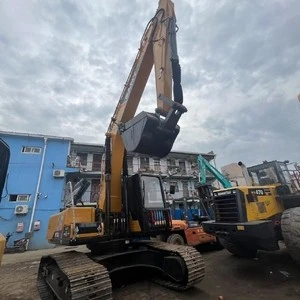
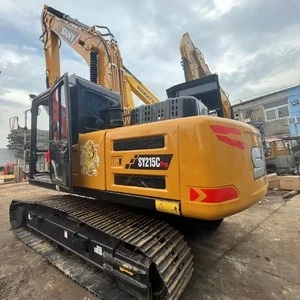
When compared to other construction machinery, such as Cat D6d Bulldozers, Sany Sy215c Hydraulic Excavator, and Cat 320d Hydraulic Crawler Excavator, the Cat 140h Grader has a unique control layout that is specifically designed for its grading tasks.
Bulldozers, for example, have a different set of controls focused more on pushing large amounts of earth. Their blade controls are mainly for forward - pushing and minor angle adjustments. Excavators, on the other hand, have controls that are centered around digging and lifting operations. The Cat 140h Grader's controls are more about precision grading, with a greater emphasis on blade movement and adjustment.
Why the Cat 140h Grader's Control Layout Matters
The well - designed control layout of the Cat 140h Grader has several benefits. Firstly, it improves operator efficiency. With easy - to - reach controls, operators can perform tasks more quickly and accurately. This means that grading jobs can be completed in less time, increasing productivity.
Secondly, it enhances operator safety. The intuitive control layout reduces the chances of operator error. For example, having clearly marked and easily accessible controls for blade movement reduces the risk of accidentally hitting the wrong lever and causing an accident.
Finally, it reduces operator fatigue. By minimizing the effort required to operate the controls, the Cat 140h Grader allows operators to work for longer periods without getting overly tired. This is beneficial for both the operator's well - being and the overall productivity of the construction project.
Contact for Purchase and Discussion
If you're in the market for a high - quality grader like the Cat 140h Grader, I encourage you to reach out. Whether you have questions about the control layout, the grader's performance, or any other aspect, I'm here to help. We can discuss your specific needs and how the Cat 140h Grader can meet them. Contact us today to start the conversation about your next construction equipment purchase.
References
- Caterpillar official documentation on the Cat 140h Grader
- Industry reports on construction machinery control design
- Interviews with experienced Cat 140h Grader operators