

What is the lift capacity of the blade on Cat D6d Bulldozers?
The Caterpillar D6D bulldozer is a well - known piece of heavy - duty construction equipment that has been widely used in various construction, mining, and earth - moving projects around the world. As a supplier of Cat D6D bulldozers, I often receive inquiries from customers about different aspects of this powerful machine, and one question that frequently comes up is about the lift capacity of its blade.
Understanding the Blade of Cat D6D Bulldozers
The blade on a Cat D6D bulldozer is a crucial component. It is designed to perform a variety of tasks such as pushing large amounts of soil, gravel, sand, and even rocks. The blade's lift capacity is an important factor that determines the machine's efficiency and productivity in different work scenarios.
The Cat D6D bulldozer typically comes with a U - blade or a straight blade. The U - blade, which has a curved shape, is designed for carrying larger volumes of material. It can hold more soil or other materials as it pushes them forward, making it suitable for long - distance pushing and bulk material movement. On the other hand, the straight blade is more suitable for fine - grading and short - distance pushing tasks.
Factors Affecting the Lift Capacity
Several factors influence the lift capacity of the blade on a Cat D6D bulldozer:
- Hydraulic System: The hydraulic system of the bulldozer is responsible for powering the blade's movement, including lifting. A well - maintained and high - performance hydraulic system can provide more force to lift the blade and the material it is carrying. The Cat D6D is equipped with a reliable hydraulic system that is designed to handle the heavy - duty lifting requirements of the blade.
- Blade Design: As mentioned earlier, the design of the blade plays a significant role. The U - blade, due to its larger capacity to hold materials, may have a different lift capacity compared to the straight blade. The shape, size, and thickness of the blade also affect how much weight it can lift. A wider and thicker blade may be able to handle more weight but may also require more power to lift.
- Machine's Stability: The overall stability of the Cat D6D bulldozer is crucial when it comes to blade lift capacity. If the machine is not stable, it may tip over when trying to lift a heavy load with the blade. The weight distribution of the bulldozer, its track width, and the center of gravity all contribute to its stability. The Cat D6D is engineered to have a good balance of weight and stability, allowing it to handle reasonable blade lift capacities safely.
- Material Density: The type of material being pushed and lifted by the blade also affects the lift capacity. For example, lifting a load of wet clay will require more force than lifting dry sand because wet clay is denser and heavier. Different materials have different densities, and the bulldozer operator needs to take this into account when operating the machine.
Determining the Lift Capacity
The exact lift capacity of the blade on a Cat D6D bulldozer can vary depending on the specific configuration of the machine and the factors mentioned above. However, according to the official Caterpillar specifications, under standard operating conditions, the lift capacity of the blade can range from approximately 2 to 3 tons. This range is applicable for both the U - blade and the straight blade, but the actual capacity may be different based on the specific situation.
It's important to note that these are general estimates, and in real - world applications, the lift capacity may be affected by factors such as the age of the machine, the condition of the hydraulic system, and the terrain on which the bulldozer is operating. For example, if the bulldozer is working on a slope, the lift capacity may be reduced due to the additional stress on the machine and the need to maintain stability.
Comparison with Other Construction Equipment
To put the lift capacity of the Cat D6D bulldozer blade into perspective, let's compare it with some other construction equipment.
The Dx60 Hydraulic Crawler Excavator is a popular excavator in the construction industry. While an excavator is mainly used for digging and lifting materials with its bucket, the lift capacity of the Cat D6D's blade is different in nature. The Dx60 excavator is designed to lift materials vertically with its bucket, and its lift capacity is more focused on the weight it can lift at the end of the boom. In contrast, the Cat D6D's blade lift capacity is related to pushing and lifting materials horizontally.

The Xcmg Xs202j Roller is a compaction machine. It doesn't have a blade - lifting function like the Cat D6D bulldozer. Its main purpose is to compact soil, asphalt, or other materials by rolling over them. So, comparing the lift capacity of the Cat D6D's blade with the Xcmg Xs202j Roller is not directly relevant, but it shows the diversity of functions in different construction equipment.
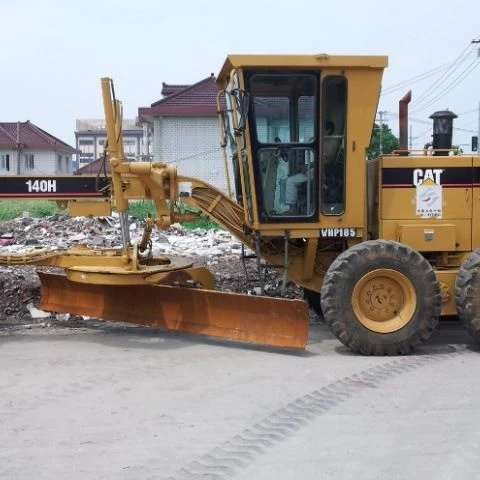
The Cat 140h Grader is another piece of equipment from Caterpillar. A grader is used for grading and leveling surfaces. The blade on a grader has a different design and function compared to the blade on a Cat D6D bulldozer. The Cat 140h Grader's blade is mainly used for precise grading, and its lift capacity and the way it handles materials are different from the Cat D6D.
Importance of Knowing the Lift Capacity
For construction companies and contractors, knowing the lift capacity of the blade on a Cat D6D bulldozer is essential for several reasons:
- Project Planning: It helps in planning construction projects more accurately. By knowing the lift capacity, contractors can estimate how much material can be moved in a given time, which is crucial for setting project timelines and budgets.
- Safety: Understanding the lift capacity ensures safe operation of the bulldozer. Overloading the blade can lead to mechanical failures, instability, and even accidents. Operators need to know the limits of the machine to avoid such risks.
- Equipment Selection: When choosing between different construction equipment for a project, knowledge of the Cat D6D's blade lift capacity can help in making the right decision. If a project requires moving large amounts of heavy materials, a bulldozer with a higher lift capacity may be more suitable.
Conclusion
In conclusion, the lift capacity of the blade on a Cat D6D bulldozer is an important characteristic that is influenced by multiple factors such as the hydraulic system, blade design, machine stability, and material density. Under standard conditions, the lift capacity can range from 2 to 3 tons, but this can vary in real - world applications.
As a supplier of Cat D6D bulldozers, I am committed to providing our customers with accurate information about the machine's capabilities. Whether you are involved in large - scale construction projects or smaller earth - moving tasks, the Cat D6D bulldozer with its reliable blade lift capacity can be a valuable asset to your team.
If you are interested in purchasing a Cat D6D bulldozer or have any questions about its blade lift capacity or other features, please feel free to contact us for further discussion and negotiation. We are here to help you make the best decision for your construction needs.
References
- Caterpillar official documentation on the D6D bulldozer.
- Industry reports on construction equipment performance and capabilities.