

What are the emissions standards for cargo trucks?
As a cargo truck supplier deeply entrenched in the industry, I've witnessed firsthand the pivotal role that emissions standards play in shaping the modern transportation landscape. These standards aren't just regulatory hoops; they're a reflection of our collective responsibility towards a cleaner, greener planet. In this blog, I'll delve into the intricacies of emissions standards for cargo trucks, exploring their significance, evolution, and the impact they have on our operations as a supplier.
The Significance of Emissions Standards
Emissions standards are a set of regulations established by governments and international bodies to limit the amount of pollutants released into the atmosphere by vehicles, including cargo trucks. These pollutants, such as nitrogen oxides (NOx), particulate matter (PM), carbon monoxide (CO), and hydrocarbons (HC), can have detrimental effects on air quality, human health, and the environment. By setting strict limits on emissions, these standards aim to reduce the environmental impact of transportation and mitigate the effects of climate change.
For cargo truck suppliers like us, emissions standards are not just a compliance requirement; they're an opportunity to innovate and differentiate ourselves in the market. By offering trucks that meet or exceed these standards, we can provide our customers with more sustainable and environmentally friendly transportation solutions. This not only helps us to attract environmentally conscious customers but also positions us as leaders in the industry.
Evolution of Emissions Standards
The history of emissions standards for cargo trucks dates back to the 1970s when concerns about air pollution and its impact on human health began to gain traction. In the United States, the Clean Air Act of 1970 was a landmark piece of legislation that established the first national emissions standards for motor vehicles, including trucks. Since then, these standards have become increasingly stringent, with each new iteration aiming to further reduce emissions and improve air quality.
In Europe, the Euro emissions standards have played a similar role in regulating the emissions of cargo trucks. These standards, which were first introduced in 1992, have been updated several times over the years to reflect advancements in technology and a growing understanding of the environmental impact of transportation. The latest Euro 6 standard, which came into effect in 2014, sets strict limits on NOx and PM emissions, making it one of the most stringent emissions standards in the world.
In addition to national and regional emissions standards, there are also international initiatives aimed at reducing the emissions of cargo trucks. The International Maritime Organization (IMO), for example, has set emissions standards for ships, while the International Civil Aviation Organization (ICAO) has established similar standards for airplanes. These initiatives highlight the global nature of the environmental challenges we face and the need for a coordinated response.
Current Emissions Standards
Currently, there are several different emissions standards in place around the world, each with its own set of requirements and regulations. In the United States, the Environmental Protection Agency (EPA) sets emissions standards for heavy-duty vehicles, including cargo trucks. The most recent EPA standards, known as Tier 4 Final, were implemented in 2014 and require trucks to meet strict limits on NOx and PM emissions.
In Europe, the Euro 6 standard is the current emissions standard for cargo trucks. This standard sets strict limits on NOx and PM emissions, as well as limits on CO and HC emissions. To meet these standards, trucks must be equipped with advanced emissions control technologies, such as selective catalytic reduction (SCR) and diesel particulate filters (DPF).
In Asia, many countries have also implemented their own emissions standards for cargo trucks. In China, for example, the China VI standard was introduced in 2021 and sets strict limits on NOx and PM emissions. This standard is similar to the Euro 6 standard and requires trucks to be equipped with advanced emissions control technologies.
Technologies Used to Meet Emissions Standards
To meet the increasingly stringent emissions standards, cargo truck manufacturers have had to develop and implement a range of advanced emissions control technologies. These technologies include:
- Selective Catalytic Reduction (SCR): SCR is a technology that uses a urea-based solution to convert NOx emissions into nitrogen and water. This technology is highly effective at reducing NOx emissions and is widely used in modern cargo trucks.
- Diesel Particulate Filters (DPF): DPFs are devices that trap and remove PM from the exhaust gases of diesel engines. These filters are highly effective at reducing PM emissions and are required by many emissions standards.
- Exhaust Gas Recirculation (EGR): EGR is a technology that recirculates a portion of the exhaust gases back into the engine to reduce NOx emissions. This technology is less effective than SCR but is still widely used in some trucks.
- Lean NOx Traps (LNT): LNTs are devices that trap and store NOx emissions during normal operation and then release and convert them into nitrogen and water during a regeneration process. This technology is less common than SCR but is still used in some trucks.
Impact on Cargo Truck Suppliers
As a cargo truck supplier, emissions standards have a significant impact on our operations. On the one hand, these standards require us to invest in research and development to develop and implement advanced emissions control technologies. This can be a costly and time-consuming process, but it's also necessary to ensure that our trucks meet the regulatory requirements.
On the other hand, emissions standards also present an opportunity for us to differentiate ourselves in the market. By offering trucks that meet or exceed these standards, we can provide our customers with more sustainable and environmentally friendly transportation solutions. This not only helps us to attract environmentally conscious customers but also positions us as leaders in the industry.
In addition to the regulatory and market impacts, emissions standards also have an impact on our supply chain. As more and more countries and regions implement stricter emissions standards, we may need to source our trucks and components from suppliers that are able to meet these standards. This can require us to establish new partnerships and relationships with suppliers, which can be a complex and challenging process.
Our Product Offerings
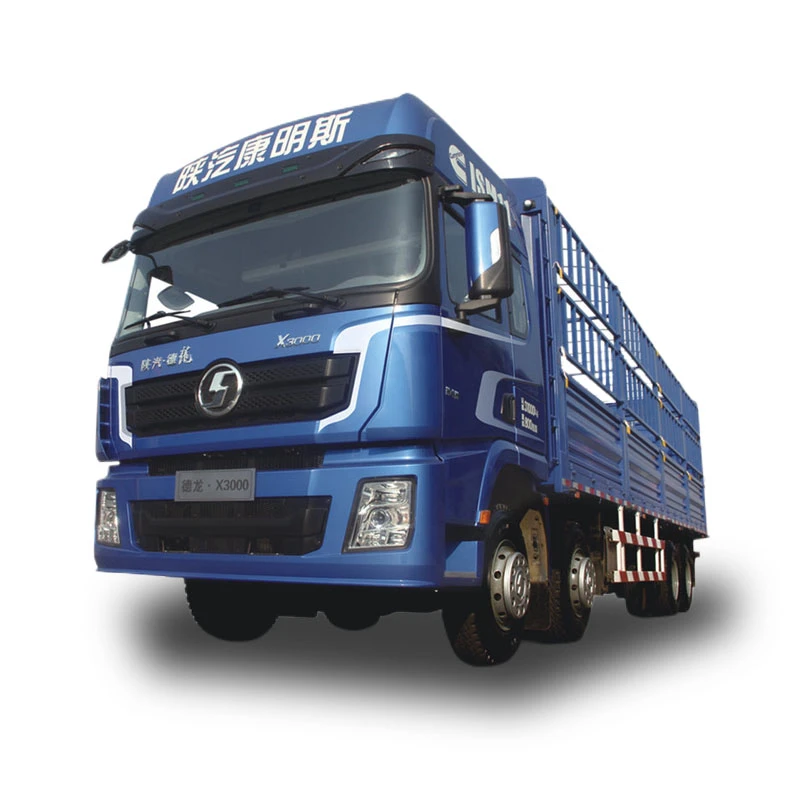
At our company, we are committed to providing our customers with high-quality, sustainable, and environmentally friendly cargo trucks. That's why we offer a range of trucks that meet or exceed the latest emissions standards, including the Howo N7w 8x4 Cargo Truck, the Shacman X3000 Cargo Truck, and the Howo 6x4 Cargo Truck.
These trucks are equipped with advanced emissions control technologies, such as SCR and DPF, to ensure that they meet the strictest emissions standards. They also offer a range of other features and benefits, such as high fuel efficiency, low maintenance costs, and excellent performance.
Conclusion
Emissions standards for cargo trucks are an important part of the modern transportation landscape. They play a crucial role in reducing the environmental impact of transportation and mitigating the effects of climate change. As a cargo truck supplier, we are committed to meeting these standards and providing our customers with sustainable and environmentally friendly transportation solutions.
If you're in the market for a cargo truck and are looking for a supplier that offers high-quality, sustainable, and environmentally friendly trucks, we encourage you to contact us. Our team of experts will be happy to answer any questions you may have and help you find the perfect truck for your needs.
References
- Environmental Protection Agency (EPA). (2023). Heavy-Duty Vehicle and Engine Standards. Retrieved from [EPA Website]
- European Commission. (2023). Euro Emission Standards. Retrieved from [European Commission Website]
- International Maritime Organization (IMO). (2023). IMO Regulations. Retrieved from [IMO Website]
- International Civil Aviation Organization (ICAO). (2023). ICAO Standards and Recommended Practices. Retrieved from [ICAO Website]