

What is the turning radius of a Cat D7h Bulldozer?
Hey there, construction enthusiasts! As a supplier of Cat D7h Bulldozers, I often get asked a whole bunch of questions about these beasts. One question that pops up quite a bit is, "What is the turning radius of a Cat D7h Bulldozer?" Well, buckle up, 'cause I'm gonna dive deep into that topic and more in this blog post.
First off, let's talk about what turning radius even means. In simple terms, the turning radius is the minimum space a machine needs to make a full 360 - degree turn. For a bulldozer like the Cat D7h, this is a crucial spec. Why? Imagine you're working on a construction site packed with other equipment, buildings, or restricted areas. A smaller turning radius means your bulldozer can move around more easily, getting the job done quicker and more efficiently.
The Cat D7h isn't your average bulldozer. It's got some impressive engineering under the hood, or rather, under that big blade. The turning radius of a standard Cat D7h bulldozer is around 4.5 - 5.5 meters (14.7 - 18 feet). That's not too shabby, considering its size and power. But hey, this can vary a bit depending on a few factors.
One of the main things that can affect the turning radius is the blade setup. The Cat D7h can be equipped with different types of blades, like a straight blade or a U - blade. A straight blade is generally a bit simpler and can have a slightly less impact on the turning radius. On the other hand, a U - blade, which is great for handling large amounts of material, is a bit wider and might make the turning radius a tad larger.
Another factor is the track configuration. The Cat D7h runs on tracks, and the width and length of these tracks matter. Wider tracks can give the bulldozer more stability but might also increase the turning radius a bit. A shorter track setup can potentially reduce the turning radius, but it might also sacrifice some stability when dealing with heavy loads or rough terrain.
Now, let's talk about how the turning radius of the Cat D7h stacks up against other construction machinery. Take the Cat 140h Grader, for example. A grader is designed to level and smooth surfaces, and it usually has a much smaller turning radius compared to a bulldozer. Graders are more agile and can navigate through tight spaces more easily, which is great for precision work on roads and small construction sites.
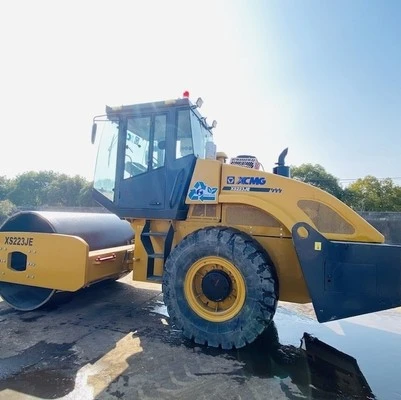
Then there's the Xcmg Xs223 Road Roller. Road rollers are all about compacting soil, asphalt, and other materials. They're built with a focus on stability and weight distribution, so their turning radius is relatively larger than a grader but can be similar to or different from the Cat D7h depending on the specific model and configuration.
And let's not forget the Xcmg Qy50k - ii Truck Cranes. These cranes are used for lifting heavy objects, and they have a very different set of requirements when it comes to movement. Their turning radius is often determined by the length of the boom and the overall size of the truck chassis. In general, they need more space to maneuver compared to a bulldozer like the Cat D7h, especially when the boom is extended.
So, why does the turning radius matter so much in the real world of construction? Well, it can make or break a project. If you're working on a small urban construction site with limited space, a bulldozer with a large turning radius might be a nightmare. It could cause delays, damage to surrounding structures, and even pose safety risks. On the other hand, a bulldozer with a reasonable turning radius, like the Cat D7h, can navigate around obstacles, make tight turns, and keep the project moving forward smoothly.
As a supplier of the Cat D7h Bulldozers, I've seen firsthand how these machines can transform a construction project. Their combination of power, durability, and a decent turning radius makes them a top choice for many contractors. Whether you're building a new road, clearing a site for a building, or working on a mining project, the Cat D7h can handle it.
If you're in the market for a bulldozer, I highly recommend considering the Cat D7h. Its turning radius is just one of the many features that make it a great investment. And if you have any more questions about the turning radius, blade setups, track configurations, or anything else related to the Cat D7h, don't hesitate to reach out. I'm here to help you make the best decision for your construction needs.
Whether you're a small - scale contractor or part of a large construction firm, having the right equipment is crucial. The Cat D7h can be that game - changer for your projects. So, if you're interested in purchasing a Cat D7h Bulldozer or want to learn more about it, feel free to contact me for a friendly chat and to start the procurement process. I'll provide you with all the details you need to make an informed decision.

Let's work together to take your construction projects to the next level!
References
- Caterpillar official documentation on the Cat D7h Bulldozer
- Industry research on construction machinery turning radii
- Real - world experience with Cat D7h and other construction equipment